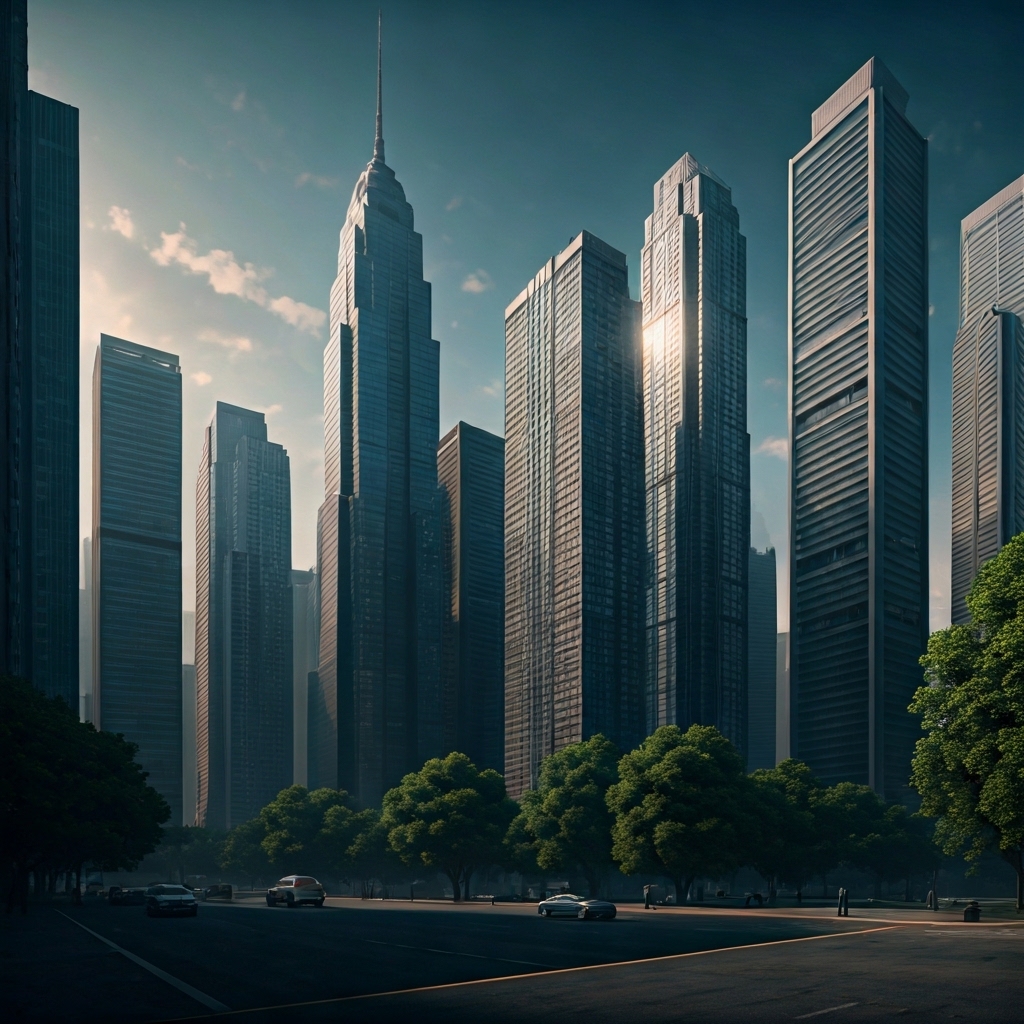
## The Concrete That Breathes: Fungi as the Unsung Architects of Our Future Cities
The relentless march of urbanisation, with its ever-expanding concrete arteries, has inadvertently choked the very lifeblood out of our metropolises. For decades, we have built upwards and outwards, a testament to human ambition, yet in doing so, we have erected monuments to our own material limitations. Now, however, a quiet revolution is taking root, not in gleaming laboratories, but within the very fabric of our cities, challenging our ingrained perceptions of what it means for something to be alive, and more importantly, to heal.
Imagine, if you will, a city that doesn’t merely stand, but *responds*. A metropolis where the scars of time and stress are not merely patched, but autonomously mended. This is the nascent reality being forged by bio-integrated, self-healing materials, a concept so audacious it borders on the alchemical. The paradox at its heart is as profound as it is elegant: a material synonymous with inertness, with the very antithesis of organic vitality, is being imbued with biological traits, transforming it from a passive structure into an active participant in its own longevity.
### The Urban Scar Tissue
Our cities, for all their vibrant energy, are perpetually battling a silent epidemic of decay. The constant stress of traffic, the seismic tremors of daily life, and the relentless assault of the elements all conspire to create microscopic fissures in our concrete foundations. These hairline fractures, seemingly insignificant at first, are the insidious entry points for water and corrosive agents, progressively weakening the structural integrity of bridges, buildings, and roads. The cost of perpetual repair, both in financial terms and in the disruption to daily life, is staggering. We are, in essence, engaged in a Sisyphean struggle against entropy, forever pushing the boulder of maintenance uphill.
### The Fungal Whisperers
The breakthrough lies not in a more resilient concrete mix, but in a microscopic partnership. Researchers are now embedding dormant spores of specific fungal species – hardy extremophiles accustomed to the harsh conditions of subterranean life – directly into the concrete mixture. These fungal architects, invisible to the naked eye, lie dormant until awakened by the very forces that threaten to dismantle their urban home.
When a crack forms, and water seeps in, it acts as a biological alarm clock. The fungal spores germinate, their hyphae – thread-like structures – extending outwards. As they grow, these hyphae secrete calcium carbonate, a mineral compound that effectively seals the crack. It is, in essence, a biological scar tissue forming precisely where it is needed, a self-repairing mechanism woven into the very DNA of the urban landscape. This isn’t a crude patch; it’s a living, breathing mending process, akin to how a bone knits itself back together after a fracture.
### Beyond the Mend: A Cooler Future
The applications of this bio-integration extend beyond mere structural resilience. The urban heat island effect, a phenomenon where metropolitan areas are significantly warmer than their surrounding rural counterparts due to the absorption and re-emission of heat by concrete and asphalt, is a growing concern for public health and energy consumption. Here too, our fungal collaborators offer a surprising solution.
Certain species of these embedded fungi possess the ability to absorb atmospheric carbon dioxide during their metabolic processes. While the scale of this absorption may seem minuscule at an individual crack level, when applied across vast swathes of urban infrastructure, it presents a tangible pathway towards mitigating the heat-trapping properties of our cities. Imagine entire buildings, bridges, and pavements subtly contributing to a cooler, more breathable urban atmosphere, a far cry from the passive heat sinks they currently represent.
### The Paradoxical Bloom
The notion of a dead, industrial material possessing biological traits is, admittedly, a concept that challenges our deeply ingrained categorisations. We associate concrete with permanence, with the unyielding, the inorganic. Yet, within its pores, a microscopic world thrives, a testament to nature’s remarkable adaptability and ingenuity. This is not a case of nature reclaiming the city, but rather a sophisticated symbiosis, where human innovation has learned to harness the fundamental principles of life to enhance the very structures we build.
The implications are far-reaching. This bio-integrated concrete promises not only extended lifespans for our infrastructure, reducing the perpetual cycle of demolition and reconstruction, but also a more sustainable and resilient urban environment. It is a subtle, yet profound, shift in our relationship with the materials that define our built world, moving from a paradigm of passive construction to one of active, biological partnership. The concrete that breathes is not a futuristic fantasy; it is the quiet, intelligent evolution of our cities, whispering a promise of durability and sustainability, one microscopic fungal filament at a time.