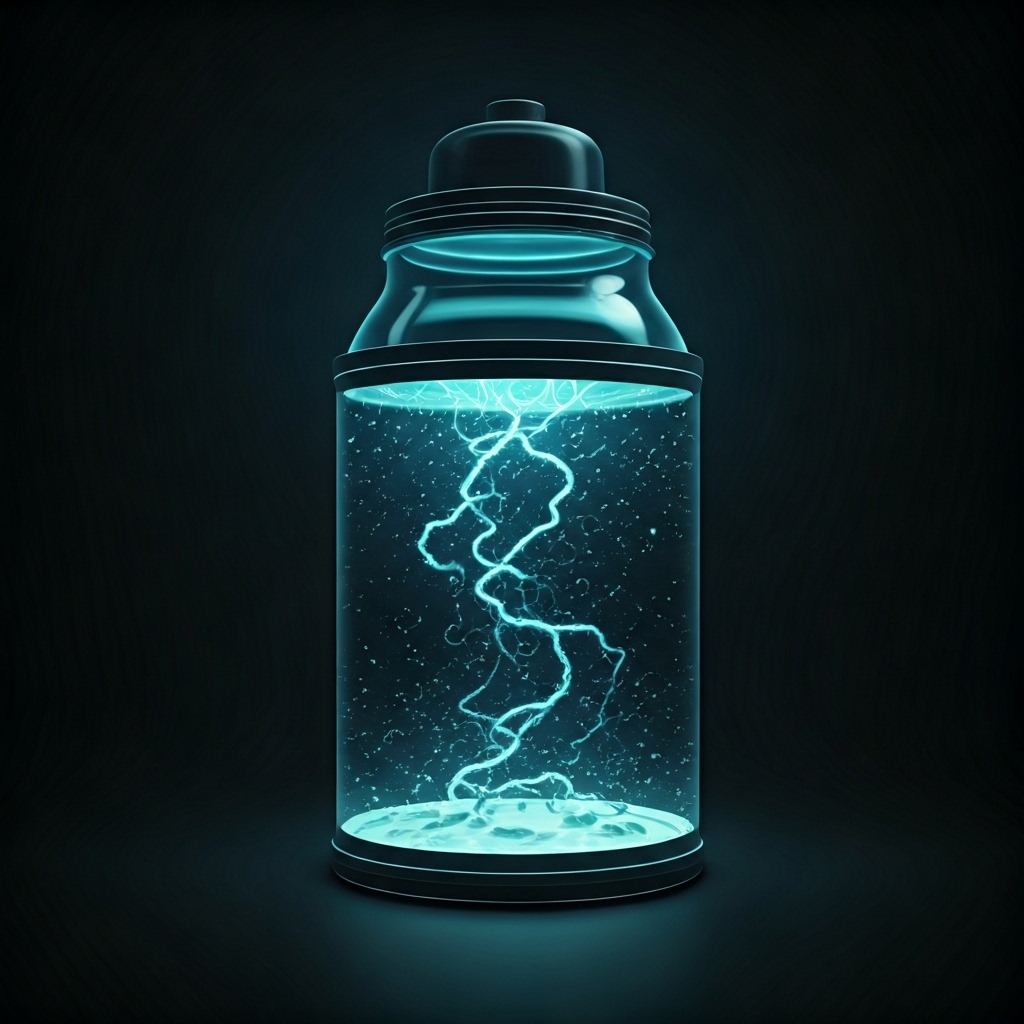
## The Battery Made of Glass: A Fragile Dawn for Global Energy
The persistent hum of our electrified future has long been shadowed by a fundamental constraint: the energy storage dilemma. For decades, the world has grappled with the insatiable demand for power, a demand that has often been met with solutions carrying their own considerable environmental and geopolitical baggage. Now, a quiet revolution is brewing, one born from an unlikely alliance between the brittle and the boundless.
Imagine, if you will, a fortress constructed from spun sugar, designed to withstand the relentless siege of global energy needs. This is the paradox at the heart of the emerging solid-state sodium-glass battery cell, a technology poised to redefine our relationship with power, and in doing so, perhaps mend some of the fissures in our planet’s delicate equilibrium. The very material once associated with fragility, with the tinkling shatter of a dropped goblet, is now being meticulously engineered to form the bedrock of a new energy paradigm. This isn’t a story of brute force, but of elegant precision, a testament to human ingenuity finding strength in the unexpected.
This intelligence brief delves into the implications of solid-state sodium-glass battery cells entering commercial production. It’s a development that promises not just incremental improvements, but a seismic shift in how we power our world, particularly within the burgeoning electric vehicle sector.
* **Doubling the Horizon:** These novel battery cells are demonstrating the capacity to effectively double the range of electric vehicles, transforming range anxiety from a persistent whisper into a distant echo.
* **Shedding the Shackles:** By moving away from traditional lithium-ion chemistries, this technology liberates us from the complex and often contentious global supply chains associated with lithium mining.
* **A Greener Footprint:** The environmental toll of extracting and processing lithium, a significant concern in the current energy transition, is largely circumvented, paving a more sustainable path forward.
### The Alchemy of Glass and Sodium
For years, the electric vehicle industry has been locked in a dance with lithium. It’s a partnership that has brought us remarkable progress, but one increasingly strained by the realities of resource scarcity and ethical sourcing. Lithium, extracted from briny desert lakes or hard-rock mines, comes with a heavy price tag, both environmentally and geopolitically. The quest for this silvery metal has fueled resource competition and raised legitimate concerns about water usage, land disruption, and the social impact on communities near extraction sites.
Enter the humble glass. Not the kind found in your kitchen cabinets, but a meticulously crafted, highly conductive solid electrolyte. This isn’t a leap of faith; it’s the culmination of years of dedicated research into the unique properties of certain glass compositions. These aren’t just inert containers; they are active participants in the electrochemical process, facilitating the movement of sodium ions with remarkable efficiency. Think of it as a meticulously woven tapestry, where the threads of glass provide a stable, non-flammable framework for the energetic dance of sodium.
The beauty of this approach lies in its inherent simplicity and the abundance of its core components. Sodium, a far more common element than lithium, is readily available across the globe, diminishing the reliance on a handful of geopolitical hotspots. And glass, well, glass is practically ubiquitous. This democratization of raw materials has the potential to level the playing field, making advanced battery technology more accessible and less susceptible to the whims of international politics.
### The Paradoxical Strength of Fragility
The notion of glass powering our vehicles might initially conjure images of delicate circuitry shattering under the slightest pressure. This is where the true ingenuity of the solid-state sodium-glass battery lies. The perceived fragility of glass is, in this context, a misdirection. The electrolyte, a critical component of any battery, is typically a liquid. These liquid electrolytes, while effective, can be volatile, posing fire risks and limiting the overall energy density of the cell.
Solid-state electrolytes, and specifically those based on glass, offer a fundamental advantage: inherent safety. They are non-flammable, meaning the risk of thermal runaway, a significant concern with traditional lithium-ion batteries, is dramatically reduced. This inherent stability allows engineers to push the boundaries of energy density, packing more power into a smaller, lighter package. The glass, far from being a weakness, becomes a shield, a robust armature that enables the efficient and safe transfer of energy.
Consider the analogy of a finely tuned musical instrument. A violin’s delicate wood is essential for its resonant sound, yet it requires careful handling. In this battery, the glass electrolyte acts as the precisely carved soundboard, enabling the powerful performance of the sodium ions without the inherent risks of a more volatile medium. This is not about brute force resilience, but about a sophisticated understanding of material science that transforms a seemingly delicate substance into a cornerstone of high-performance energy storage.
### Beyond the Electric Car: A Ripple Effect
While the immediate impact on the electric vehicle market is undeniable, the implications of this solid-state sodium-glass technology extend far beyond the automotive realm. The promise of safer, more energy-dense, and more sustainable batteries opens doors for a multitude of applications.
Imagine grid-scale energy storage, where vast arrays of these batteries could stabilize renewable energy sources like solar and wind, smoothing out their intermittent nature and providing reliable power on demand. This could be a game-changer in the fight against climate change, allowing us to transition away from fossil fuels with greater confidence.
Furthermore, the reduced geopolitical risk and the wider availability of materials could democratize access to advanced energy storage in developing nations. This technology could empower communities to build their own resilient energy infrastructure, fostering economic growth and improving quality of life without being beholden to distant suppliers or volatile global markets.
The journey from laboratory curiosity to commercial production is rarely a straight line. There will undoubtedly be challenges to overcome, manufacturing hurdles to clear, and further refinements to be made. However, the fundamental promise of the solid-state sodium-glass battery is too significant to ignore. It offers a compelling vision of an electrified future that is not only more powerful but also demonstrably safer, more sustainable, and more equitable. The quiet hum of progress is growing louder, and it’s being powered by something as seemingly unassuming, yet as profoundly capable, as glass.