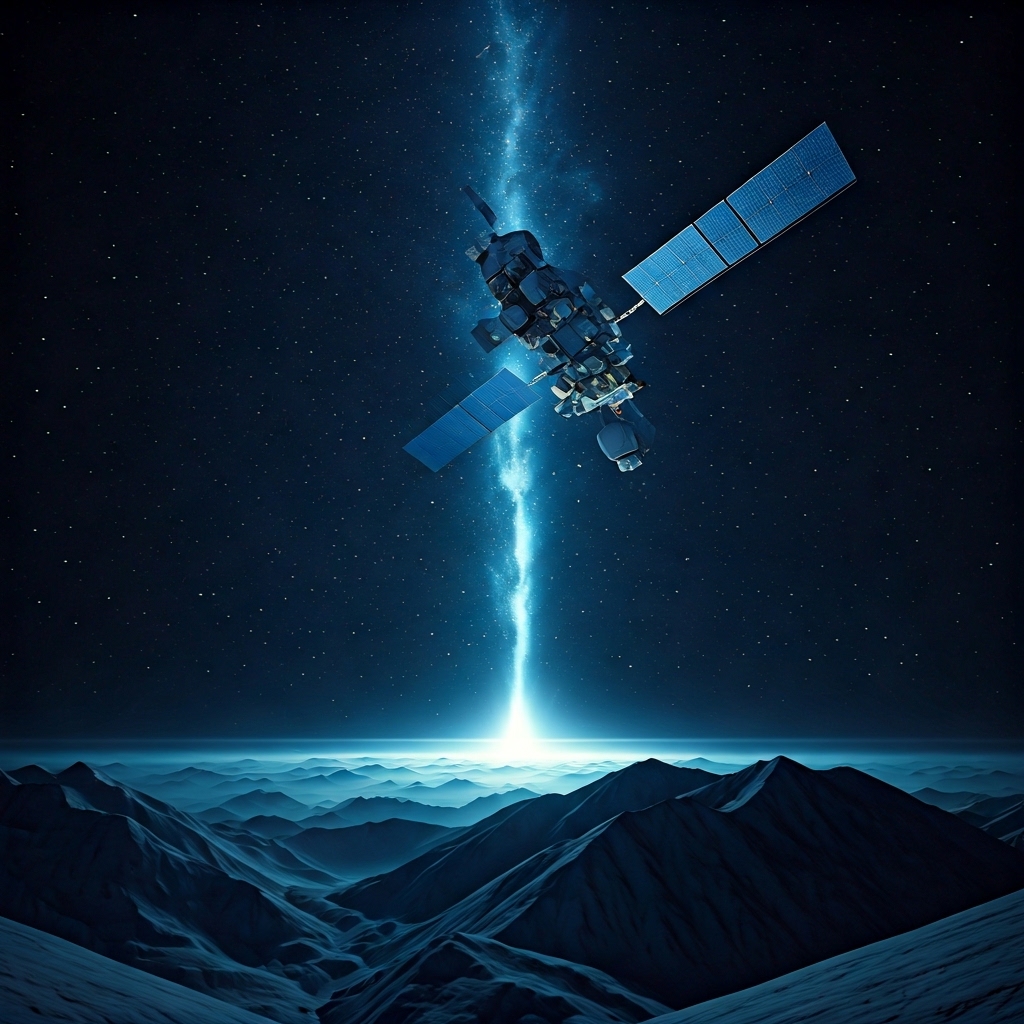
## The Sky Will Be Blind: Our Digital Dreams vs. Cosmic Truth
**We face a critical challenge: how to balance our growing need for digital connection with the preservation of our ability to understand the universe.** This tension is at the heart of a stark new warning that could fundamentally alter our relationship with the cosmos. As commercial ventures plan to fill Earth’s orbit with an unprecedented number of satellites, we risk building an invisible shield that will permanently dim our view of the stars.
**A Universe Under Construction**
The coming years promise a dramatic expansion of our presence in space, driven by the ambition for global digital connectivity. Companies are proposing to launch approximately 1.7 million satellites, a scale of activity that dwarfs anything seen before. This isn’t just about a few extra lights in the night sky. It’s about transforming the very nature of our orbital environment.
**The Coming Orbital Crowding**
This massive influx of satellites will create a significantly more crowded low-Earth orbit. Imagine a highway system becoming so jammed that traffic grinds to a halt. In space, this crowding translates into a persistent interference that directly impacts our ability to observe the universe.
**Blinding Our Telescopes**
Ground-based telescopes, the sensitive eyes through which humanity has explored the cosmos for centuries, are facing a serious threat. The sheer number of satellites will create constant light pollution, scattering sunlight and obscuring faint celestial objects. Even more concerning is the radio frequency interference. These satellites will emit signals that can drown out the subtle whispers from distant galaxies, effectively deafening our most advanced instruments.
**Losing Our Window to the Universe**
The consequences are profound. We are at risk of permanently blinding our ground-based telescopes, cutting off our physical window to the deep universe. This isn’t a minor inconvenience; it’s a potential end to an era of cosmic discovery that has shaped our understanding of our place in the universe.
**The Regulatory Race Against Time**
The current regulatory frameworks are struggling to keep pace with the speed of private development. Approvals for these mega-constellations are being granted, but the long-term implications for astronomical research are not being adequately addressed. This leaves a critical gap between technological advancement and responsible stewardship of our shared orbital space.
**A Call for Global Cooperation**
International space agencies are now facing a crucial decision. To prevent the commercial infrastructure from permanently dimming our view of the cosmos, they must act swiftly. Establishing global orbital traffic caps is essential. This would set limits on the number of satellites allowed in orbit, ensuring that our pursuit of digital connectivity does not come at the cost of our ability to explore and understand the universe. The future of ground-based cosmic discovery hangs in the balance.